Postek (HK) Co., Limited | HSI Series
HSI Surface-Mount High-Speed Transmission Micro-Rectangular Connector
3.125 Gbps+ · 20–120 Contacts · 6–15 mm Board-to-Board · -55°C to +125°C
HSI Series Surface-Mount High-Speed Micro-Rectangular Connector
1. Product Overview
The HSI Series is a surface-mount high-speed transmission micro-rectangular connector designed for demanding inter-shelf signal interconnections in high-reliability flight systems, radar platforms, and control computers. With a low-profile board-to-board height ranging from 6 mm to 15 mm and a data rate exceeding 3.125 Gbps, it is optimized for high-density, space-constrained applications requiring robust signal integrity. The connector features a reinforced metal shell and twisted-wire elastic contacts for stable, vibration-resistant performance.
Key Features
2. Technical Specifications
2.1 Electrical Specifications 📄 Datasheet
| Parameter | Value |
|---|---|
| Characteristic Impedance | 100±15 Ω |
| Data Rate | 3.125 Gbps+ |
| Rated Current | 1 A |
| Dielectric Withstanding Voltage | 500 V |
| Insulation Resistance | ≥ 1000 MΩ (500 VDC) |
| Contact Resistance | ≤ 30 mΩ |
| Differential Crosstalk | ≤ 5% (@ 3.125 Gbps) |
2.2 Mechanical & Environmental Specifications 📄 Datasheet
| Parameter | Value |
|---|---|
| Mechanical Life | 500 cycles |
| Sinusoidal Vibration | 10 Hz ~ 2000 Hz, 196 m/s² |
| Random Vibration | 10 Hz ~ 2000 Hz, 0.4 G²/Hz |
| Shock | 735 m/s², 11 ms |
| Operating Temperature | -55°C to +125°C |
| Salt Spray | 48 h (Aluminum Alloy Shell), 96 h (Stainless Steel Shell) |
| Storage Conditions | Temperature: -10°C to +40°C; Humidity: ≤ 75% RH |
Abbreviation Glossary
- Gbps
- Gigabits per second — unit of data transfer rate.
- Characteristic Impedance
- The impedance of a transmission line that determines signal reflection behavior.
- Differential Crosstalk
- Unwanted signal coupling between differential pairs, expressed as a percentage.
- Dielectric Withstanding Voltage
- Maximum voltage the insulator can withstand without breakdown.
3. Part Number Nomenclature
Example: HSI-60ZKJ0-01
HSI — Series Designator
60 — Number of Contacts (20, 30, 40, 50, 60, 64, 70, 80, 84, 90, 100, 110, 120)
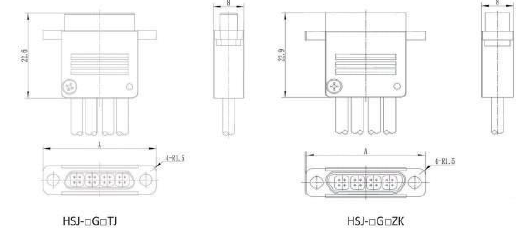
ZK — Connector & Contact Type (TJ: Plug with Pin; ZK: Receptacle with Socket)
J — Board-to-Board Height Code (J: 6mm, A: 7mm, B: 8mm, C: 9mm, D: 10mm, E: 11mm, F: 12mm, G: 13mm, H: 14mm, I: 15mm)
0 — Gold Plating Thickness (0: 1.27μm, 1: 0.76μm, 2: 0.38μm)
01 — Design Sequence Number
Nomenclature Table
| Position | Parameter | Code / Options |
|---|---|---|
| 1 | Series | HSI |
| 2 | Contact Count | 20, 30, 40, 50, 60, 64, 70, 80, 84, 90, 100, 110, 120 |
| 3 | Connector Type | TJ (Plug with Pin), ZK (Receptacle with Socket) |
| 4 | Board-to-Board Height | J (6mm), A (7mm), B (8mm), C (9mm), D (10mm), E (11mm), F (12mm), G (13mm), H (14mm), I (15mm) |
| 5 | Gold Plating Thickness | 0 (1.27μm), 1 (0.76μm), 2 (0.38μm) |
| 6 | Locking Component | None (Default), P (P-Type Locking) |
| 7 | Design Sequence | 01, 02, 03… |
| 8 | Shell Material | None (Aluminum Alloy), G (Stainless Steel) |
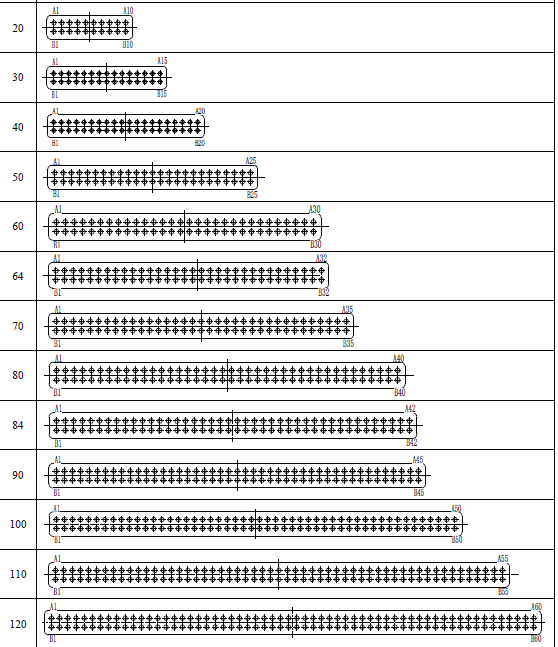
4. Contact Arrangements
| Contact Count | Row A | Row B |
|---|---|---|
| 20 | A1 – A10 | B1 – B10 |
| 30 | A1 – A15 | B1 – B15 |
| 40 | A1 – A20 | B1 – B20 |
| 50 | A1 – A25 | B1 – B25 |
| 60 | A1 – A30 | B1 – B30 |
| 64 | A1 – A32 | B1 – B32 |
| 70 | A1 – A35 | B1 – B35 |
| 80 | A1 – A40 | B1 – B40 |
| 84 | A1 – A42 | B1 – B42 |
| 90 | A1 – A45 | B1 – B45 |
| 100 | A1 – A50 | B1 – B50 |
| 110 | A1 – A55 | B1 – B55 |
| 120 | A1 – A60 | B1 – B60 |
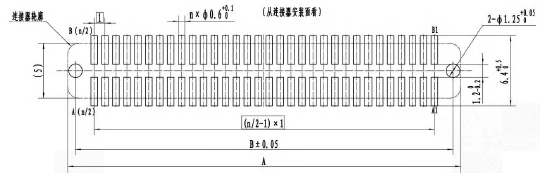
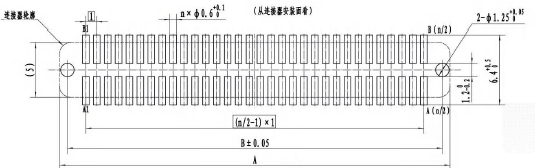
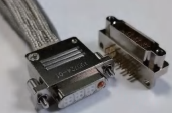
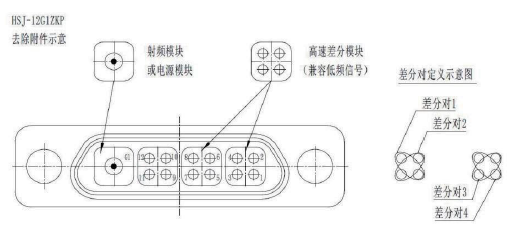
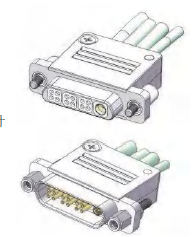
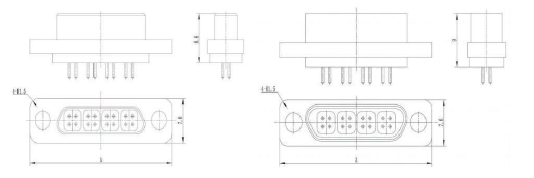
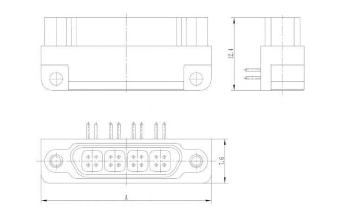
5. Dimensional Drawings & PCB Layouts
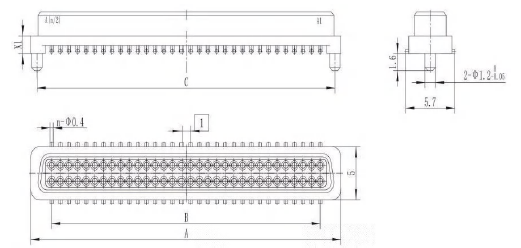
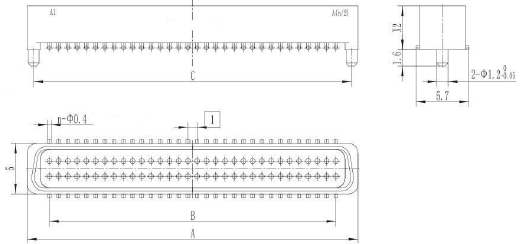
6. Applications & Compliance
6.1 Typical Applications
6.2 Certifications & Standards
7. Frequently Asked Questions
What data rate does the HSI series support?
The HSI series supports data rates exceeding 3.125 Gbps, making it suitable for high-speed digital signal transmission in demanding environments.
What board-to-board heights are available?
Ten standard heights are available: 6, 7, 8, 9, 10, 11, 12, 13, 14, and 15 mm. The height is specified by a letter code in the part number (J through I).
How many contact positions can I get?
The series offers 13 standard contact counts: 20, 30, 40, 50, 60, 64, 70, 80, 84, 90, 100, 110, and 120 positions.
What is the difference between TJ and ZK connector types?
TJ designates a plug connector with pin contacts, while ZK designates a receptacle connector with socket contacts. They are a fixed mating pair.
Are locking components available?
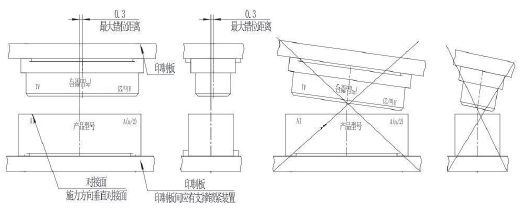
By default, the connector has no locking components. A P-type locking component is available as an option. For parallel board applications, external support pillars and locking devices are recommended.